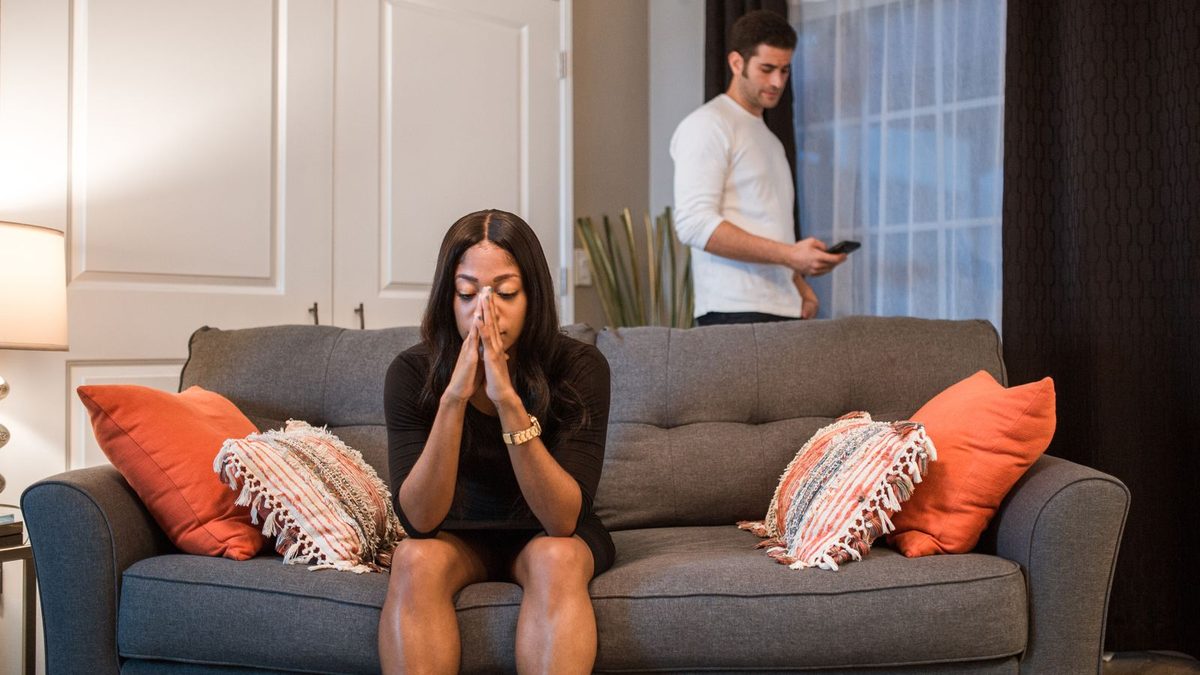
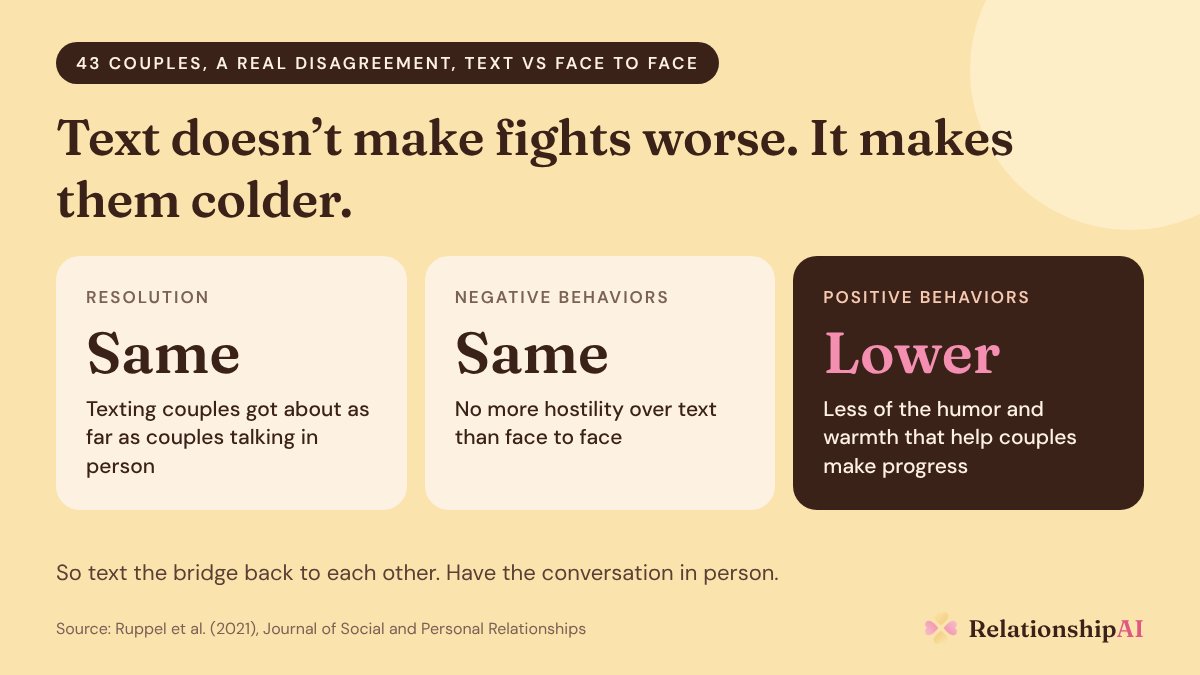
In a 2021 experiment, researchers asked 43 couples to work through a real disagreement, either face to face or by text. Both groups made about the same progress toward solving it. The difference was elsewhere: over text, couples showed fewer of the warm, positive moves that soften a fight, like humor and affection.
That one finding explains most of what goes wrong with the text after a fight. Text is fine for building a bridge back to each other. It's a poor place to have round two. This guide gives you 20 messages for the hours after an argument with your boyfriend, girlfriend or partner, sorted by situation, plus a simple check for when to send them and when to put the phone down.
The short answer: After a fight, text to reconnect, not to keep arguing. Name the pause you need, own your part in one clear sentence, reassure your partner that you still care, and suggest a time to talk properly. Save explanations and the actual disagreement for a calm conversation, ideally in person or by call.
What research says about texting after a fight
A few studies have looked at what happens when couples handle conflict by text, and together they paint a useful picture.
Text doesn't make fights worse, but it removes the warmth. In the 2021 study by Erin Ruppel and colleagues, couples who texted through a conflict didn't feel worse afterward, and their negative behaviors weren't higher. But positive conflict behaviors were lower over text. Across both groups, people who used more of those positive behaviors reported more progress toward resolution. A 2020 study of 100 couples by Monique Pollmann and colleagues found no difference in distress, anger or resolution between face-to-face and computer-mediated conflict talks either.
Working things out by text is linked to lower relationship quality. In a 2013 survey of 276 young adults by Lori Schade, Jonathan Sandberg and colleagues at Brigham Young University, women who used texts to apologize, work out differences or make decisions reported lower relationship quality. Sending loving texts, on the other hand, was linked to a better relationship for everyone.
Style matters more than frequency. Psychologist Leora Trub found that people whose partner texted in a style similar to their own were more satisfied with the relationship, and that how couples texted mattered more than how often.
Put together: a short, warm text after a fight helps. A long text that tries to settle the disagreement usually doesn't, because it carries the argument without the tone of voice, the face and the small signals that make it land gently.
Quick quiz: Want to know how you tend to act in a fight? Try our 2-minute conflict style quiz.
Before you type: a 3-question check
1. Have we both cooled down? When you're flooded, your body is in fight mode and you can't hear well. Julie Schwartz Gottman suggests a break of anywhere from about 20 minutes to 24 hours, with a time you agree on together. If your heart is still racing, the best text is a short one that buys time.
2. Is this a bridge text or a round-two text? A bridge text pauses, owns, reassures or schedules. A round-two text explains, corrects, defends or brings up something new. Only send the first kind.
3. Would I say this in the same words to their face? If you'd soften it in person, soften it now. Text strips out your tone, so it lands harder than you think.
| Bridge text (send it) | Round-two text (don't) |
|---|---|
| "I need an hour to calm down. I'm not going anywhere." | "I just need you to understand why I was upset." |
| "I'm sorry I raised my voice." | "I'm sorry I raised my voice, but you were being impossible." |
| "Can we talk tonight after dinner?" | "Also, while we're at it, about last weekend..." |
| "I love you, even when we fight." | A six-paragraph message about everything that's wrong |
20 texts to send after a fight, by situation
When you need space
- "I need a bit of time to calm down so I don't say something I don't mean. Can we talk at 8?" Fits right after a heated moment. The time matters: a pause with an end point feels safe, an open-ended silence doesn't.
- "I'm still upset, but I'm not leaving. I just need tonight to think." For when you need longer. It answers the fear many people have during silence: is this over?
- "Taking a walk to clear my head. Back by 6." Short and practical. Good for partners who worry when you go quiet.
When they asked for space
- "Okay. Take the time you need. I'm here when you're ready." Then actually wait. Sending three more messages "just to check" turns space into pressure.
- "I'll give you some room. I love you, and I want to sort this out together." One reassurance, then stop.
- "No rush. Whenever you're ready, I'd like to hear what was going on for you." Signals that you want to listen, not to win.
When you were wrong
- "I'm sorry I said you never help. That wasn't fair or true." The best apology texts name the exact thing. "Sorry for everything" sounds like you want the topic to end.
- "I was out of line earlier. I'd like to apologize properly when we're together." Use this when the hurt is big. The text opens the door, the real apology happens in person.
- "You were right about me being on my phone all evening. I'm going to leave it in the other room tonight." Owning it plus a small change is stronger than owning it alone.
- "I keep thinking about how I spoke to you. I'm sorry. You didn't deserve that." For when you said something sharp. No "but", no explanation yet.
For a full guide to apologies that land, see how to apologize to your partner.
When you both said things you regret
- "That got out of hand on both sides. I'm sorry for my part." Own your share without demanding theirs. People often match an apology once they feel safe.
- "I hate fighting with you. Can we start again tomorrow?" Simple and warm. It treats the fight as the problem, not each other.
- "I don't want to be right, I want us to be okay. Can we talk tonight?" Good when the argument has turned into a contest.
When you still think they were wrong
- "I'm still hurt about earlier, and I'd like to talk about it when we're both calm. When works for you?" Keeps your feelings on the table without starting the argument again by text.
- "I don't want to argue over text. Can we talk about it this evening?" Useful when they keep sending long messages.
- "I love you. I also need us to talk about what happened. Both are true." For when you're angry but don't want them to doubt the relationship.
When they haven't replied
- "I know you might still need time. I'm not upset that you haven't replied. I'm here." Send once. Then give them the space you said you would.
- "Thinking about you. No need to answer right now." Low pressure. Works well the next day if the silence continues.
The next morning
- "Morning. I'm glad we're us, even after last night. Coffee later?" A light, affectionate text the morning after reminds you both that the relationship is bigger than the fight.
- "Thanks for talking it through last night. I feel closer to you today." If you did resolve it, say so. Naming a good repair makes the next one easier.
Why the bridge works and the essay doesn't A bridge text does one job: it tells your partner that you're still on the same team. An essay asks them to read your whole case, alone, with no tone of voice to soften it, and decide how to respond. Most people respond to that the way they would to an attack: by defending themselves.
What not to send after a fight
- "We need to talk." With no context, it sounds like a breakup warning. Add what and when: "Can we talk tonight about this morning?"
- "Fine." or "Whatever." These end the conversation without ending the fight. Your partner will read them as anger or withdrawal.
- "I'm sorry you feel that way." It apologizes for their feelings, not for anything you did. Most people hear it as no apology at all.
- The midnight essay. Long messages sent late, while you're still upset, are the most likely to restart the fight. Write it in your notes app if you need to, then sleep on it.
- Screenshots to friends. Venting to a friend is human, but forwarding your partner's private words breaks trust in a way that's hard to undo.
Moving from text to talk
The goal of every text on this list is to get you into a real conversation, calmer than the fight. When you get there, start gently, talk about one thing, and listen until your partner feels understood before you make your case. Our guide to communication habits shows how, and how to rebuild trust after a fight walks you through the next day and the week after.
If I had to pick one text from this list, it's the one that names a time to talk. It turns a tense silence into a plan, and it tells your partner the relationship isn't in question.
If you've typed and deleted the same message five times, Message check can show you how it's likely to come across before you hit send, and suggest a gentler version if it reads as cold or defensive.
Quick answers
Should I text first after a fight?
If you're calm and you want to reconnect, yes. Texting first isn't losing. It's often the move that ends a standoff, especially if your text owns your part instead of asking them to own theirs.
How long should you wait to text after a fight?
Long enough that you're both calm, which can be anywhere from about 20 minutes to a day. If you need longer, send a short text that says so and names when you'll talk, so the silence doesn't feel like punishment.
Is it okay to apologize over text?
For small things, yes. For bigger hurts, a text works best as an opener ("I'm sorry, and I'd like to apologize properly tonight") with the full apology in person or by call, where your partner can hear that you mean it.
What if he or she doesn't text back after a fight?
Send one calm message that says you're there when they're ready, then wait. Repeated messages usually feel like pressure. If days pass without contact, that silence is information worth talking about when you do speak.
A note on safety
Fights happen in healthy relationships. But if texts after an argument include threats, insults, demands to account for where you are, or messages that make you afraid, that's not ordinary conflict. Please talk to someone you trust or contact a local domestic abuse helpline or support service. Our guide to signs of a toxic relationship may help you see the pattern clearly.
In the US, you can reach the National Domestic Violence Hotline at 1-800-799-7233, by texting START to 88788 or at thehotline.org, and the 988 Suicide & Crisis Lifeline by calling or texting 988. Outside the US, contact a local helpline.
This article is general information, not therapy or medical advice.
Sources
- Ruppel, E. K., Cherney, M. R., Quinn, S. F., & Richards, R. J. (2021). Effects of mediated communication on conflict behavior, resolution, and affect in romantic couples. Journal of Social and Personal Relationships, 38(12), 3633-3645. DOI
- Pollmann, M. M. H., Crockett, E. E., Vanden Abeele, M. M. P., & Schouten, A. P. (2020). Does attachment style moderate the effect of computer-mediated versus face-to-face conflict discussions? Personal Relationships, 27(4), 939-955. Tilburg University record
- Schade, L. C., Sandberg, J., Bean, R., Busby, D., & Coyne, S. M. (2013). Using technology to connect in romantic relationships: Effects on attachment, relationship satisfaction, and stability in emerging adults. Journal of Couple & Relationship Therapy, 12, 314-338. Summary from BYU News
- American Psychological Association (2018): It's complicated: Our relationship with texting, on research by Leora Trub
- NPR (2024): The secret to lasting love might just be knowing how to fight, with John Gottman and Julie Schwartz Gottman